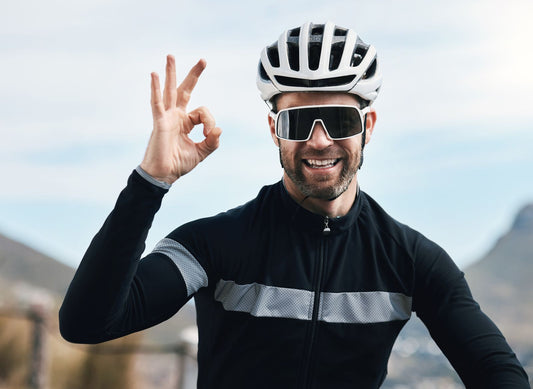
Sunglasses Lens Colours and Categories: A Simple Guide
Sunglasses lenses come in different tint colours and darkness levels, and each one changes how you see the world. Grey keeps colours natural, brown boosts contrast, and yellow brightens low light. The darkness is rated in filter categories from 0 to 4, and category 4 lenses are too dark for driving.
Quick answer: For everyday sunglasses, a category 3 lens in grey, brown or green suits most people. Choose the colour for how it shows contrast and colour, and the category for how bright your conditions are. Never drive in category 4.
Sunglasses filter categories 0 to 4
Filter categories describe how much visible light a lens lets through. They are about brightness and comfort, not UV protection. A lens in any category can block 100% of UV, so always check for UV400 or 100% UV protection as well.
| Category | Light let through (approx.) | Best for |
|---|---|---|
| 0 | 80 to 100% | Clear or very light tint, fashion or indoor use, low light |
| 1 | 43 to 80% | Light tint for overcast days |
| 2 | 18 to 43% | Medium sun, everyday wear in moderate light |
| 3 | 8 to 18% | Bright sun, the most common sunglasses category |
| 4 | 3 to 8% | Very bright conditions like high-altitude snow or glaciers. Not for driving |
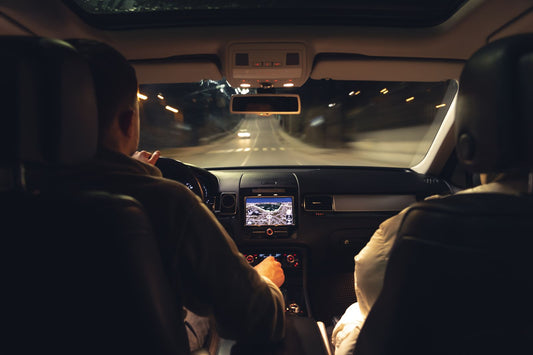
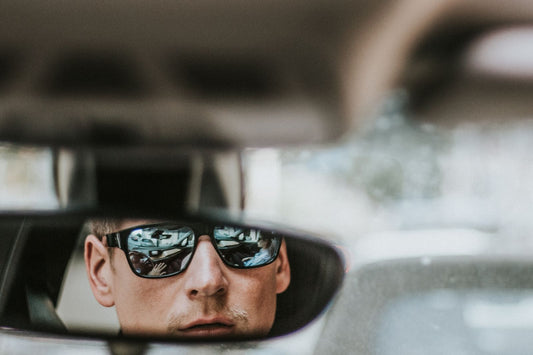
Category 4 lenses let through so little light that they are not suitable for driving at any time. If you want sunglasses for the car, a category 2 or 3 lens is the usual choice. Read more in our guide to glasses for driving and night driving.
Sunglasses lens colours explained
Grey
Grey reduces brightness evenly across all colours, so the world looks natural, just darker. It is a great all-rounder for driving and everyday use.
Brown, amber and copper
Brown tints boost contrast and depth perception and give a warm look. They are popular for driving, golf and variable conditions.
Green
Green offers a balance between grey and brown: fairly natural colours with a little extra contrast. A classic choice for general wear.
Rose and red
Rose tints can increase contrast and feel easy on the eyes. They are often chosen for cycling and some snow sports in changing light. Colours can look noticeably shifted.
Yellow and orange
Yellow lenses brighten dull, flat or foggy light and sharpen contrast, so they suit overcast sport and shooting. They are not designed for bright sun. Be cautious with yellow "night driving" lenses; they reduce the total light reaching your eyes, which may not help at night.
Mirror and gradient lenses
- Mirror lenses have a reflective outer coating that bounces back extra light. They are great in very bright conditions like water and snow, and they look striking. Mirror coatings need gentle cleaning to avoid scratches.
- Gradient lenses are darker at the top and lighter at the bottom. They cut glare from above while letting you see your dashboard or phone clearly. Double gradient lenses are dark at top and bottom and lighter in the middle, which suits the beach and snow.
Matching the lens to the activity
| Activity | Suggested colour | Suggested category |
|---|---|---|
| Everyday and driving | Grey, brown or green | 2 or 3 |
| Beach and water | Grey or brown, often polarised or mirrored | 3 |
| Cycling and running | Rose, brown or amber | 2 or 3 |
| Overcast or low light | Yellow or light rose | 1 or 2 |
| Bright snow and alpine | Grey or brown with mirror | 3 or 4 (not for driving) |
For sport-specific advice on shape, fit and impact resistance, see our guide to sunglasses for sport and the outdoors. If glare off water or roads bothers you, also read polarised vs non-polarised sunglasses.
Tint is not the same as UV protection
A darker lens does not mean better UV protection. In fact, dark lenses without UV protection can be worse than none, because your pupils open wider behind them. Always look for a UV400 or 100% UV rating. New Zealand has high UV levels for much of the year, so this matters. Learn more in our guide to UV protection and sunglasses in NZ and check daily UV levels with SunSmart.
If you want a lens that adjusts by itself, photochromic lenses darken outdoors and clear indoors. And to keep tinted and mirrored lenses looking good, follow our tips on how to care for sunglasses.
Key terms
- Filter category
- A rating from 0 to 4 that describes how dark a sunglasses lens is and how much light it lets through.
- Tint
- The colour of a lens, which affects how you see colour and contrast.
- Mirror coating
- A reflective layer on the outside of a lens that bounces back extra light.
- Gradient lens
- A lens that fades from darker at the top to lighter at the bottom.
- UV400
- A rating meaning the lens blocks UV light up to 400 nanometres, covering UVA and UVB.
Frequently asked questions
What is the best sunglasses lens colour?
There is no single best colour. Grey is the most neutral, brown boosts contrast, and green sits in between. Pick based on your activity and what feels comfortable.
Can I drive with category 4 sunglasses?
No. Category 4 lenses are too dark for driving. Use category 2 or 3 for the car.
Do darker lenses protect better from UV?
No. Darkness and UV protection are separate. Check the label for UV400 or 100% UV protection.
Are yellow lenses good for night driving?
Be cautious. Yellow lenses can make things look brighter, but they still reduce the light reaching your eyes. If you struggle to see at night, see an optometrist.
Find your perfect tint in our sunglasses collection or sports sunglasses, or visit our Panmure store to try different lens colours in real daylight.
Tags:
Previous
How to Read Your Glasses Prescription: SPH, CYL, AXIS and ADD
Next
How Glasses Should Fit: Signs of a Good Fit and Easy Fixes